





How do I store a heavy - duty welding table when not in use?
Nov 04, 2026
Leave a message
If you're running a fabrication shop, metalworking studio, or even a large-scale manufacturing facility, you already know how game-changing a heavy-duty welding table is. These aren't your flimsy, wobbly workbenches from a big-box store-they're built to hold hundreds, sometimes thousands, of pounds of steel, aluminum, and other metal stock, stand up to repeated heat, spatter, and the rough-and-tumble of daily welding work. But here's the thing: most of us don't use our tables 24/7. Whether you're shifting shop layouts for a big project, closing up for the night, or storing gear during a seasonal lull, figuring out how to store a heavy-duty welding table without ruing it later is a skill all welders and shop managers need to nail.


As someone who's been supplying heavy-duty welding tables for years (I've seen it all, from folks who store their tables in random corners of the shop to the ones that do it right), I've picked up a ton of practical tips to keep your table in top shape when it's not getting used for welds. Let's break this down, step by step, no fancy jargon-just real, actionable stuff that actually works.
First, let's talk about why storing a heavy-duty welding table wrong is such a big deal. These tables are precision tools, not just work surfaces. If you let 'em sit around, unprotected, they can rust, warp, get covered in grime that's a pain to clean off later, or even get damaged by heavy stuff stacked on top of 'em. I've had a customer bring in a D28/D16 welding table that they'd stored leaning against a wall for 6 months-they didn't even know the edge had started to bend a little until they tried to line up a weld with their jigs. That tiny warp threw their whole alignment off, cost them a week of work, and ended up being way more expensive than just storing it right in the first place. A lot of shops skip this step because they think "it's just a table," but when your table is the foundation of every weld you do, messing up its storage is a quick way to headaches.
Start with Prep: Clean It Before You Put It Away
You wouldn't leave a half-eaten sandwich out in your fridge, right? Same logic applies to your welding table. Before you even think about moving it to storage, do a deep clean. Welding spatter, flux residue, dust, and even leftover metal shavings might seem like no big deal in the moment, but they can etch into the surface, trap moisture, or attract rust over time. Here's how to do it quick:
- Knock off loose spatter with a wire brush (a hand-held one works great for small tables, or a wire wheel on a drill for bigger ones-just don't press too hard, you don't want to scratch the precision slots on your table).
- Wipe down the whole surface with a degreaser. I like a simple citrus-based degreaser, it's tough on grease but not too harsh on the table's finish. Skip the all-purpose cleaners-they usually leave a film that's hard to get off later.
- Blow out any junk that's stuck in the holes (if you've got a 3D welding fixture table with jigs, those holes are where you lock in your fixtures, so leaving spatter in there will make your jigs wonky when you pull it out again next time).
Once it's clean, take 2 minutes to inspect for small issues: any spots where the paint is chipped, or a tiny spot of rust starting to form. If you catch those early, you can touch 'em up with a little touch-up paint before storage, instead of dealing with full rust damage later.
Next, Pick the Right Storage Spot
Where you store your heavy-duty welding table matters way more than most people realize. I've seen folks try to cram a modular fixture welding table into a tiny corner of their shop, right next to a leaky window or a stack of wet lumber. That's a recipe for rust. Here's what to look for in a good storage spot:
- Dry, as in no standing moisture, no leaks, and good ventilation. Humidity is your table's enemy-even a little moisture in the air can cause rust on bare steel over time. If you can, store it off the floor. A lot of shops use cinder blocks or sturdy metal stands to lift tables up off concrete floors (concrete wicks up moisture, even if it looks dry)
- Flat, level surface. You can't store a heavy-duty welding table leaning at an angle, even if you're short on space. If it's not level, it can warp over months-those precision slots that make your table work will get out of alignment, and suddenly your 3D welding platform isn't so 3D anymore. If you don't have a big, flat space, look for areas with adjustable stands so you can keep it perfectly level.
- Away from heavy debris. Don't stack metal parts, tools, or even empty gas cylinders on top of your table-those can scratch the surface, bend the edges, or dent the precision slots. If you're storing it for a long time, keep it clear of any stuff that could accidentally tip into it.
If you've got a portable welding table, storage gets a little easier because you can move it around, but even then, you still need to follow the same rules: dry, flat, off the floor.
How to Position It (No, Not Just Leaning Against the Wall)
This is the part where I see people make the most mistakes. A lot of folks think "well, it's heavy-duty, so leaning it against the wall is fine." No. Just no. Even the sturdiest table can warp if it's leaning at a 45-degree angle for months on end. Here's the right way to position it:
- The best bet is laying it flat, right-side up. That's how it's designed to be used, so it stays in the exact shape it was made for. If you've got space for a portable welding table or a modular fixture welding table, this is easiest. Just make sure whatever you're laying it on is strong enough to hold its weight-heavy-duty tables can weigh 500+ pounds, so a couple of thin wooden pallets won't cut it. Use solid metal stands, or thick, heavy-duty wooden beams if that's what you have.
- If you absolutely have to stand it up (no flat space, for example), never just lean it against a wall. Use proper table racks or vertical storage brackets that are made for heavy gear. These brackets support the whole length and width of the table, not just one corner, so it doesn't twist. Make sure the wall it's leaning against is solid, not a flimsy drywall partition-you don't want the whole thing to come crashing down. I've had a customer who stored their D28/D16 welding table standing up on a drywall wall, and the bracket pulled out after 3 months-ruined one end of the table, and almost crushed a cooler they had right next to it. Total nightmare.
- If you're storing it with jigs attached (you've got a 3D welding fixture table with jigs, right?), take the jigs off before storage. Leaving them attached puts extra stress on the table's slots and the jig's frame, which can make both bend over time. Clean the jigs too, store them in a separate dry spot, and label them so you know where they go when you're ready to use the table again.
Add a Protective Layer
Even if you're storing it in a dry spot, adding a little extra protection goes a long way, especially if you're storing it for more than a few weeks. Here are the easy, cheap options:
- If your table has a bare steel surface (no powder coat), wipe it down with a light coat of oil-mineral oil, or a light machine oil works. Just don't use too much, you don't want grease dripping onto your shop floor later. The oil creates a barrier between the metal and moisture, so no rust. When you're ready to use it again, just wipe the oil off with a degreaser, and you're good to go.
- If your table has a powder coat finish, you don't need oil, but a breathable cover will keep dust and grime off it. Use a heavy-duty tarp made for industrial use, not a thin plastic sheet-plastic traps moisture, which can cause rust if there's any small tear in the sheet. A canvas tarp works great, or a waterproof industrial tarp if your storage spot has a little humidity.
- For the precision slots on your modular fixture welding table, dab a little anti-seize compound in each slot. That keeps them from seizing up if they get a little damp, and makes it way easier to slide your jigs back in when you pull the table out. I learned this the hard way-after storing a table for a few months, my jigs wouldn't slide into the slots because they'd gotten a tiny bit corroded. That anti-seize step takes 5 minutes, and saves you a lot of frustration later.
Long-Term Storage Tips (3 Months or More)
If you're storing your heavy-duty welding table for a big project (like a shop remodel, or a seasonal lull in business), you'll want to take a few extra steps to make sure it's good when you pull it out again:
- Keep it indoors, no exceptions. If you have to store it outside, cover it with a heavy waterproof tarp, and elevate it at least 6 inches off the ground. But honestly, I've seen tables stored outside in good covers still get a little rusty after 6 months-indoor is always better.
- Do a check-in every month. Even if it's stored perfectly, it's good to peek in once a month to make sure nothing shifted, no moisture got in, and there's no new rust spot. I had a customer who stored their table for 8 months, and a small tear in their tarp let a little rain in-they didn't check, and came back to a rusted spot on the corner. A 2-minute check once a month avoids that.
- If you've got a lot of tables, organize them so the ones you need first are easiest to get to. There's no point in stacking a portable welding table on top of your most-used 3D welding platform, because you'll have to move it every time you need the other one. Label your storage spots, so you can grab what you need fast.
Wait, What About Common Mistakes I See All the Time?
Let's quickly clear up a few myths I hear from shop owners:
- "Heavy-duty tables can handle anything, so I can stack other stuff on top of 'em." No. Even if it's rated for 1000 lbs on the surface, that's for welding, not stacking toolboxes or steel beams. You'll dent the precision surface, and warp the table over time.
- "I don't need to clean it, it's gonna get dirty again when I use it." The leftover spatter and flux will etch into the surface, and cause rust that's way harder to remove later. Trust me, 10 minutes of cleaning now is way easier than sanding and refinishing the whole table later.
- "Leaning it against the wall is fine, I do it with my other shop gear." Your welding table is a precision tool, not a workbench or a shelf. The slanted weight twists the table's frame, and that makes the slots and grid lines get out of alignment. Once that's messed up, your welds won't be as accurate, and you'll waste time fixing alignment every time.
Ready to Get a Table That's Easy to Store (And Work On)?
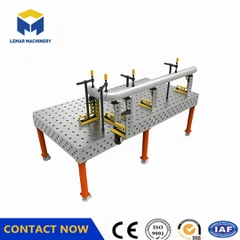
If you're in the market for a heavy-duty welding table that's built to last, no matter how you store it, we've got you covered. We offer a range of options, from the sturdy D28/D16 welding table, which is perfect for all-day heavy use, to the modular fixture welding table that lets you adjust your setup for any project. We even have a 3D welding fixture table with jigs, so you can get everything you need in one setup, and easy to store when you're done. If you need something that's easy to move, our portable welding tables are a great fit-light enough to shift around, but still tough enough for all your welds. Our three-dimensional welding platform is another great option if you need a flexible, precision surface that stands up to long storage.
Whether you're just storing your table for a few weeks, or planning a long break from shop work, doing it right will save you time, money, and a ton of headaches down the line. If you're looking for a heavy-duty welding table that's built to handle tough use, both on the job and in storage, reach out to us to talk through your needs. We can help you pick the right table for your shop, and share more tips to keep it in shape.
Send Inquiry