

How to use a Fabrication Welding Fixture Table for fillet welding?
Sep 29, 2026
Leave a message
Fillet welding is a common and essential welding technique used in various industries, from automotive manufacturing to construction and metal fabrication. A Fabrication Welding Fixture Table plays a crucial role in ensuring the accuracy and efficiency of fillet welding operations. As a leading supplier of Fabrication Welding Fixture Tables, I am here to share with you how to effectively use such a table for fillet welding.
Understanding the Fabrication Welding Fixture Table
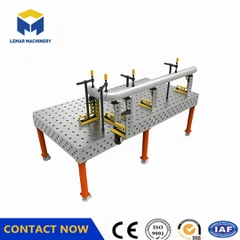
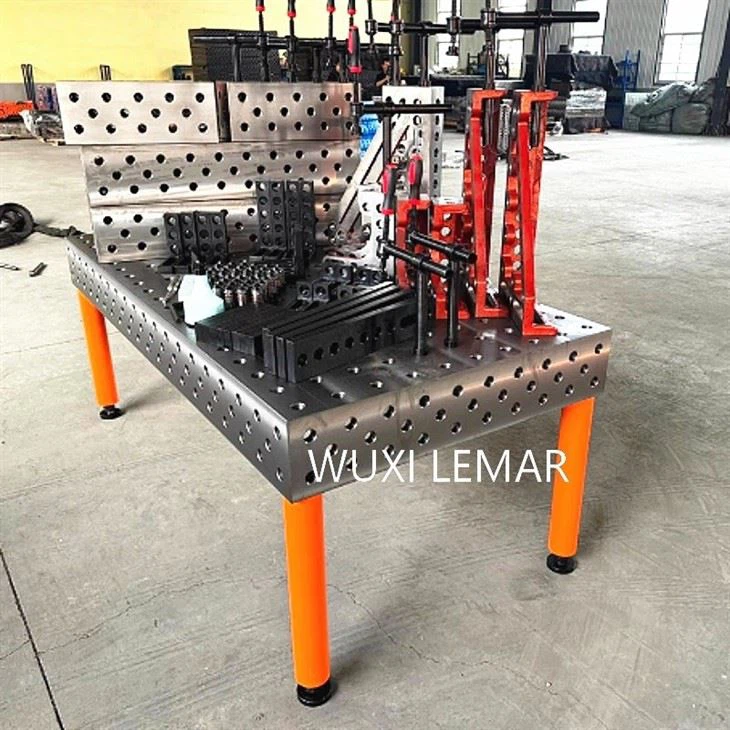
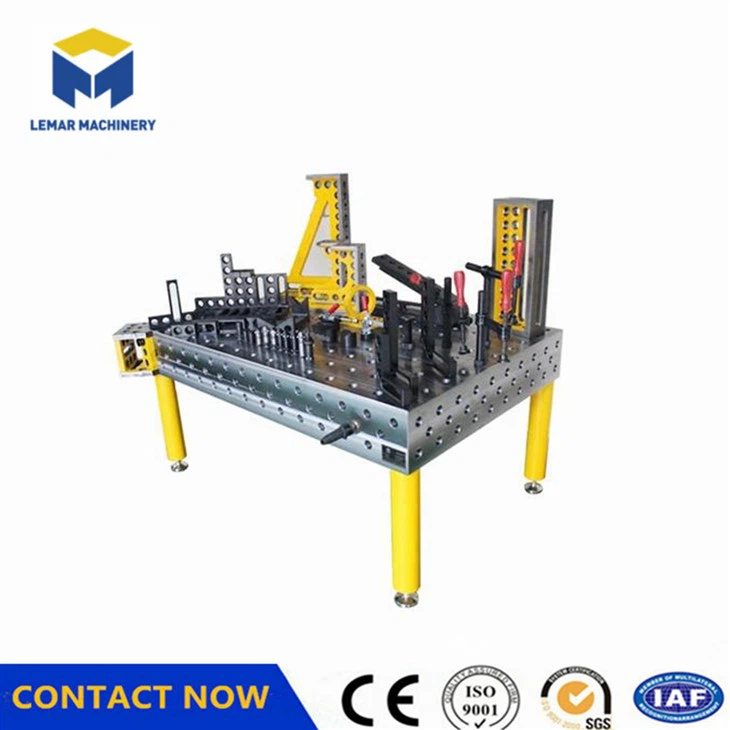
Before delving into the usage, it's important to understand what a Fabrication Welding Fixture Table is and its key features. Our tables are designed with precision and durability in mind. They are typically made of high - quality metals, such as steel, which can withstand the high temperatures and pressures associated with welding.
The surface of the table is often equipped with a grid of holes or slots. These holes serve multiple purposes. Firstly, they allow for the attachment of various clamping fixtures, stops, and other accessories. This enables you to securely hold the workpieces in place during the welding process. Secondly, the grid pattern provides a reference system, which helps in accurately positioning the workpieces relative to each other.
Preparing the Workpieces
The first step in using a Fabrication Welding Fixture Table for fillet welding is to prepare the workpieces. This involves cleaning the surfaces to be welded. Any dirt, rust, oil, or paint on the workpieces can affect the quality of the weld. Use a wire brush, grinder, or chemical cleaner to remove these contaminants.
Next, measure and mark the workpieces according to the welding requirements. Determine the length and position of the fillet welds. Make sure the workpieces fit together properly and have the correct alignment. This is where the grid pattern on the welding fixture table comes in handy. You can use the holes or slots to align the workpieces precisely, ensuring that the angle and distance between them are as required.
Setting Up the Welding Fixture Table
Once the workpieces are prepared, it's time to set up the welding fixture table. Start by selecting the appropriate clamping fixtures. There are various types of clamps available, such as C - clamps, toggle clamps, and magnetic clamps. Choose the ones that are suitable for the size and shape of your workpieces.
Attach the clamps to the holes or slots on the table. Place the workpieces on the table and use the clamps to hold them firmly in position. Make sure the workpieces are not distorted by the clamping force. If necessary, use additional supports or spacers to ensure the stability of the workpieces.
For more complex welding tasks, you may need to use additional accessories, such as angle blocks or adjustable stops. These can help you achieve the desired angle and position of the workpieces. Our 3D Welding Fixture System offers a wide range of accessories that can be easily integrated with the welding fixture table to meet different welding requirements.
Selecting the Welding Process
There are several welding processes that can be used for fillet welding, such as shielded metal arc welding (SMAW), gas metal arc welding (GMAW), and tungsten inert gas welding (TIG). The choice of welding process depends on various factors, including the type of material, thickness of the workpieces, and the required quality of the weld.
If you are using a TIG welding process, our Tig Welding Table Top is a great option. It is designed to provide a stable and clean surface for TIG welding, which is known for its high - quality and precise welds.
Performing the Fillet Welding
Once the workpieces are set up and the welding process is selected, it's time to start the fillet welding. Put on appropriate safety gear, including welding helmet, gloves, and protective clothing.
Position the welding torch or electrode at the joint of the workpieces. For fillet welding, the torch or electrode should be at an angle of approximately 45 degrees to the workpieces. Start the welding arc and move the torch or electrode along the joint at a consistent speed. The speed of the welding process is crucial. If the speed is too fast, the weld may be incomplete or have poor penetration. If the speed is too slow, the workpieces may overheat, leading to distortion or other welding defects.
During the welding process, pay attention to the appearance of the weld pool. A good fillet weld should have a smooth and uniform appearance, with no cracks, porosity, or other defects. If you notice any problems, stop the welding immediately and make the necessary adjustments.
Post - Welding Operations
After the fillet welding is completed, it's important to perform some post - welding operations. First, turn off the welding equipment and allow the workpieces to cool down gradually. Do not quench the hot workpieces in water, as this can cause stress and cracking in the weld.
Inspect the welds for any defects. You can use non - destructive testing methods, such as visual inspection, dye penetrant testing, or ultrasonic testing, to check the quality of the welds. If any defects are found, repair them using appropriate welding techniques.
Finally, clean the welding fixture table and the workpieces. Remove any welding spatter or debris from the table surface. Our Rust Prevention 3D Welding Table System helps in protecting the table from rust and corrosion, which can extend its service life.
Customization and Flexibility
One of the advantages of our Fabrication Welding Fixture Tables is their high degree of customization. We offer Customizable welding tables that can be tailored to your specific needs. Whether you need a table of a particular size, with special features, or for a specific type of welding application, we can work with you to design and manufacture the perfect table.
Our Metal 3D Welding Table is a popular choice for many customers. It combines the strength and durability of metal with the flexibility of a 3D design. This allows for a wide range of welding operations, including fillet welding, in a more efficient and precise manner.
Conclusion
Using a Fabrication Welding Fixture Table for fillet welding can significantly improve the quality and efficiency of your welding operations. By following the steps outlined above, from workpiece preparation to post - welding operations, you can achieve high - quality fillet welds consistently.
As a leading supplier of Fabrication Welding Fixture Tables, we are committed to providing our customers with the best - quality products and excellent service. If you are interested in purchasing a welding fixture table or have any questions about our products, please feel free to contact us for further discussion. Our team of experts is always ready to assist you in finding the right solution for your welding needs.
Send Inquiry