

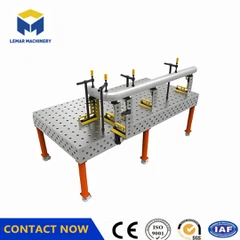
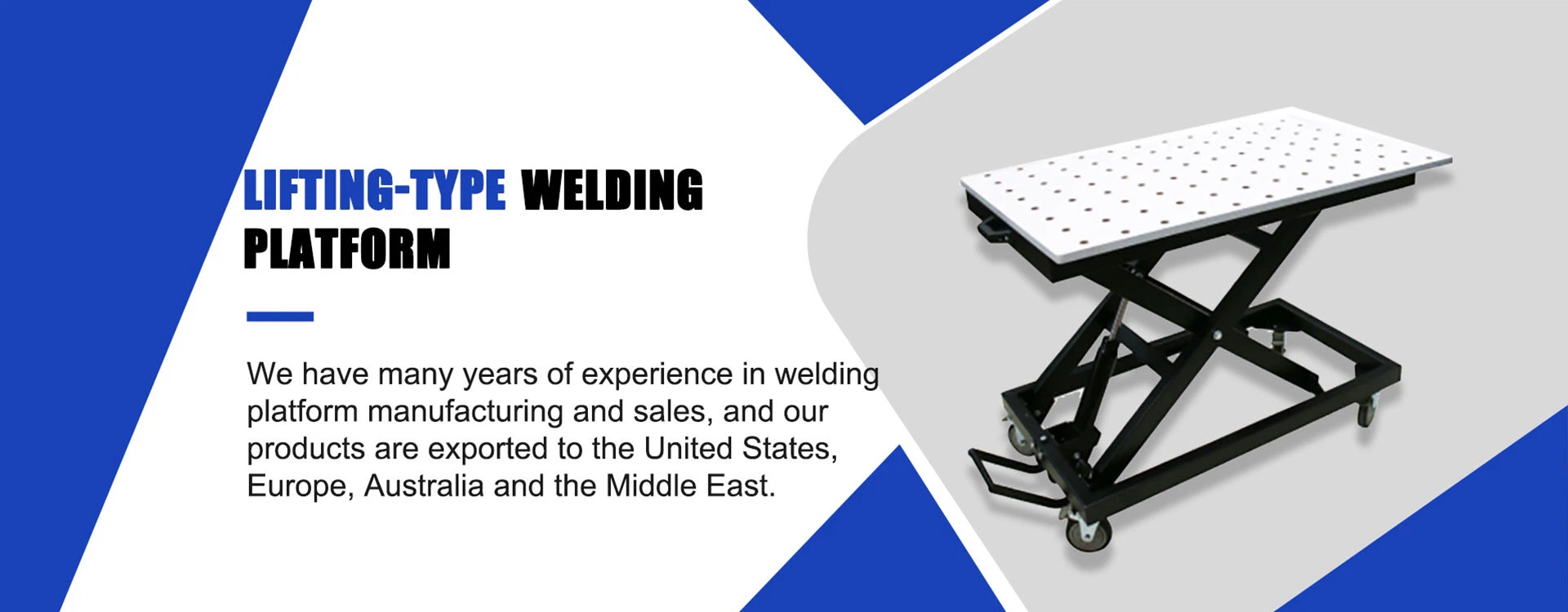
How often should a 3D welding workbench be leveled?
Mar 09, 2026
Leave a message
I. Reference for Regular Leveling Cycles
1. Basic Maintenance Cycle
In general industrial environments, if the equipment is used at a moderate frequency (less than 8 hours of work per day), a comprehensive leveling can be performed every 12 months.
If the usage intensity is high and continuous operation is frequent, it is recommended to shorten this to once every 6 months.
2. Judging by Usage Status
Leveling should not only rely on the time cycle, but also on actual performance. Leveling should be carried out immediately when the following situations occur:
Uneven weld bead formation or abnormal first layer cladding
Automatic welding path deviation, inaccurate positioning hole system
Displacement of fixtures during repeated installation
II. Special Leveling Strategies for High-Temperature Conditions
Given that the equipment you are currently maintaining operates in a high-temperature environment, thermal expansion will accelerate structural deformation. Therefore, more proactive leveling management is required:
1. Dual-Stage Leveling in Cold and Hot Conditions
Initial Cold Leveling: Basic leveling is performed after the equipment is shut down and cooled down.
1. Hot-State Adjustment: After the dyeing machine reaches its normal operating temperature, the platform status is checked again and fine-tuned to compensate for thermal deformation.
2. Leveling at Key Time Nodes:
Before each major overhaul or equipment restart; during seasonal changes (large temperature variations can easily cause minor deformations in the foundation); after continuous high-load welding operations (such as completing the welding of large components).
3. Dynamic Monitoring-Assisted Decision-Making: Temperature and displacement sensors can be installed on the platform to monitor thermal drift trends in real time, guiding precise leveling of the machine and avoiding excessive maintenance or inaccurate operation.
III. Post-Leveling Maintenance and Verification:
1. Accuracy Verification: Use an electronic level or multi-point laser measurement system to re-measure, ensuring that the flatness error is controlled within ≤0.1mm per meter.
2. Hole System Function Check: Randomly check the fit between the positioning holes and the fixtures to confirm there is no jamming or eccentricity.
3. Protective Treatment: After leveling, clean the platform, apply anti-rust oil, and cover with moisture-proof paper for storage or operation.

Send Inquiry