

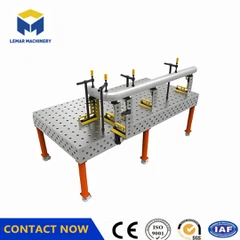


How to Clean a 3D Welding Workbench?
Feb 23, 2026
Leave a message
I. Preparation Before Cleaning
1. Power Off and Cooling: Ensure the equipment is completely stopped, disconnect the power, and wait for the platform temperature to drop to room temperature.
2. Disassemble Fixtures and Accessories: Remove all detachable parts such as pressure plates, positioning pins, and support blocks, and store them separately to avoid loss.
3. Protect Surrounding Equipment: Cover nearby robots, sensors, or control cabinets with dust covers to prevent dust from entering during cleaning.
II. Overall Cleaning of the Workbench
1. Initial Removal of Large Residues: Use specialized tools such as a wire brush, scraper, or pneumatic slag gun to remove visible welding slag, spatter, and metal debris from the surface.
Be gentle to avoid scratching the workbench or damaging the edges of the T-slots.
2. Deep Cleaning:
Spray a specialized cleaning agent (neutral or weakly alkaline, avoid corroding the cast iron substrate) and let it stand for 3-5 minutes to soften oil and carbon deposits. Wipe the entire work surface with a lint-free cloth or sponge. For stubborn stains, use a plastic scraper for assistance.
For small crevices and the inside of T-slots, use compressed air to blow out the dirt or a long-handled brush for thorough cleaning.
3. Rust Prevention
After cleaning, immediately dry the surface with a dry cloth to prevent oxidation and rust.
When the work surface is not in use for an extended period, apply a thin, even layer of rust-preventive oil to the surface and cover it with a dust cloth.
III. Special Treatment for Key Structures
1. T-slots and Positioning Holes
Use a dedicated T-slot cleaning knife or an electric cleaning machine to clean each slot individually, ensuring no welding slag, rust, or foreign objects are obstructing the flow.
After cleaning, insert the standard positioning pins and test run to confirm smooth sliding without jamming.
2. Sensor Contact Surfaces
Gently wipe sensitive areas such as photoelectric sensors and probe contact points with a cotton swab dipped in anhydrous alcohol to remove oxide layers and oil films.
Avoid using chlorine-containing solvents or hard objects to scrape, as this may damage the plating or circuitry.
3. Hydraulic/Pneumatic Interface
Check the connector for oil or blockages. Disassemble, clean, and replace the seals if necessary.
Ensure the pipeline is unobstructed to prevent pressure fluctuations caused by impurities.

Send Inquiry