


How does the anti - skid property of a 3D welding table top work?
Oct 02, 2026
Leave a message
As a supplier of 3D welding table tops, I often get asked about how the anti - skid property of these tables works. It's a crucial feature, especially when you're working on a project that requires precision and stability. So, let's dive into the details of how this anti - skid magic happens.
The Basics of Anti - Skid in 3D Welding Table Tops
First things first, why is anti - skid so important in a 3D welding table top? Well, when you're welding, you're dealing with hot materials, and the process can generate vibrations. If your workpiece isn't held firmly in place, it can shift during the welding process. This can lead to inaccurate welds, wasted materials, and even safety hazards.
The anti - skid property of a 3D welding table top is designed to keep your workpiece stable. There are a few different ways this is achieved, and it often comes down to the materials used and the surface design.


Materials Matter
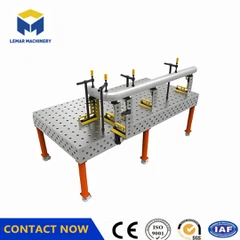
One of the key factors in the anti - skid performance of a 3D welding table top is the material it's made from. For example, our High Precision Welding Table is crafted from high - quality materials that have inherent friction properties. Cast iron is a popular choice for 3D welding table tops, as seen in our 3D Cast Iron Flexible Welding Platform. Cast iron has a rough surface at the microscopic level, which provides a natural grip for the workpiece.
When a workpiece is placed on a cast - iron table top, the tiny irregularities on the surface of the cast iron create multiple points of contact. This increases the friction between the table top and the workpiece, preventing it from sliding around easily. It's like the difference between trying to stand on a smooth ice rink and a rough gravel path. The gravel path provides more grip, and so does a cast - iron welding table top.
Surface Design
In addition to the material, the surface design of the 3D welding table top also plays a big role in its anti - skid property. Many of our tables, like the 3D Welding Fixture Table, have a specially designed pattern on the surface. These patterns can be in the form of grooves, ridges, or dimples.
Grooves and ridges work by creating channels for the workpiece to fit into. When the workpiece is placed on the table, the edges of the grooves or ridges dig into the bottom surface of the workpiece slightly. This creates a mechanical lock that prevents the workpiece from sliding horizontally. It's similar to how the treads on a tire grip the road. The deeper and more pronounced the grooves, the better the grip.
Dimples, on the other hand, work in a different way. They increase the surface area of the table top that comes into contact with the workpiece. More surface area means more friction, as there are more points of interaction between the table and the workpiece. It's like spreading out your weight over a larger area to create more stability.
The Role of Magnetic Force
Some of our advanced 3D welding table tops, such as the 3D Adjustable Welding Table, incorporate magnetic technology to enhance the anti - skid property. Magnetic plates are embedded in the table top, and when a magnetic workpiece is placed on the table, the magnetic force pulls the workpiece down towards the table surface.
This magnetic pull adds an extra layer of stability. It not only prevents the workpiece from sliding but also keeps it firmly in place vertically. This is especially useful when you're working on complex 3D welding projects where the workpiece might be subject to multiple forces.
Customization for Optimal Anti - Skid Performance
We understand that different welding projects have different requirements. That's why we offer customization options for our 3D welding table tops. For example, if you're working with a particular type of workpiece that requires a specific level of anti - skid performance, we can adjust the material, surface design, or even the magnetic strength of the table top.
Our 28 Series 3D Welding Table can be customized with different groove patterns or magnetic configurations to suit your needs. This ensures that you get a table top that provides the best possible anti - skid performance for your specific application.
Testing the Anti - Skid Property
Before we send out any 3D welding table top to our customers, we conduct rigorous testing to ensure that the anti - skid property meets our high standards. We use a variety of test methods, including measuring the coefficient of friction between the table top and different types of workpieces.
We also simulate real - world welding conditions, such as applying vibrations and heat to the table while a workpiece is in place. This allows us to see how the table top performs under actual working conditions and make any necessary adjustments.
Importance of Regular Maintenance
To keep the anti - skid property of your 3D welding table top in top condition, regular maintenance is essential. Over time, the surface of the table top can get dirty or damaged, which can reduce its friction. You should clean the table top regularly with a non - abrasive cleaner to remove any debris or welding spatter.
If you notice any damage to the surface, such as scratches or chips, it's important to address it as soon as possible. Depending on the extent of the damage, you may be able to repair the table top or, in some cases, you may need to replace it.
Wrapping Up and Invitation
In conclusion, the anti - skid property of a 3D welding table top is a combination of the right materials, smart surface design, and sometimes, magnetic technology. It's a crucial feature that ensures the stability and precision of your welding projects.
If you're in the market for a high - quality 3D welding table top with excellent anti - skid performance, we'd love to talk to you. Whether you're a small - scale welder or a large - scale manufacturing operation, we have the right table top to meet your needs. Don't hesitate to reach out for a quote or to discuss your specific requirements.
Send Inquiry