

How to clean a modular steel welding table?
Oct 03, 2026
Leave a message
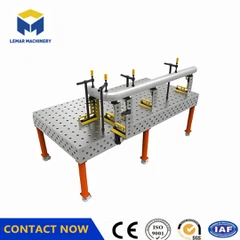
Cleaning a modular steel welding table is an essential maintenance task that ensures its longevity, precision, and overall performance. As a reputable supplier of a wide range of modular steel welding tables, including the Modular 3D Welding Platform, Welding Fixture Table With Standard Legs, Steel Nitriding Welding Table, 3D Casting Welding Table, and Portable Welding Tables, I understand the importance of proper cleaning and care.
Understanding the Importance of Cleaning
A modular steel welding table is a significant investment that plays a crucial role in various welding operations. Over time, welding spatter, rust, dirt, and other contaminants can accumulate on the table's surface, which not only affects its appearance but also its functionality. For instance, welding spatter can create uneven surfaces, making it difficult to achieve precise welds. Rust can weaken the structural integrity of the table, leading to potential safety hazards. Therefore, regular cleaning is necessary to maintain the table in optimal condition.
Pre - Cleaning Preparation
Before starting the cleaning process, it is essential to take some preparatory steps. First, ensure that the welding table is completely cooled down if it has been recently used. Hot surfaces can cause injuries during cleaning and may also react with certain cleaning agents.
Next, gather all the necessary cleaning tools and materials. This may include a wire brush, a chisel for removing stubborn spatter, a degreaser, a mild abrasive pad, clean rags, and safety equipment such as gloves and goggles. Safety is of utmost importance, as some cleaning agents can be harmful if they come into contact with the skin or eyes.
Removing Welding Spatter
Welding spatter is one of the most common contaminants on a welding table. To remove it, start by using a wire brush to brush off the loose spatter. For stubborn spatter that is firmly adhered to the table surface, a chisel can be used. However, be careful not to scratch the table surface while using the chisel. Place the chisel at a slight angle and gently tap it with a hammer to dislodge the spatter.
If there are still some small particles of spatter remaining, a mild abrasive pad can be used. Moisten the abrasive pad with a little bit of water and gently rub the areas with the spatter. This will help to smooth out the surface and remove the remaining particles.
Cleaning Grease and Oil
Grease and oil can accumulate on the welding table due to the use of lubricants in welding equipment or from handling oily parts. To clean these substances, a degreaser is an effective solution. Apply the degreaser to the affected areas according to the manufacturer's instructions. Usually, you need to let the degreaser sit on the surface for a few minutes to break down the grease and oil.
After the degreaser has had time to work, use a clean rag to wipe off the degreaser along with the dissolved grease and oil. For areas with heavy grease build - up, you may need to repeat the process. Rinse the table with clean water to remove any remaining degreaser, and then dry it thoroughly with a clean towel.
Treating Rust
Rust is a common problem for steel welding tables, especially if they are exposed to moisture or in a humid environment. To remove rust, there are several methods available. One of the simplest ways is to use a rust remover. Apply the rust remover to the rust - affected areas and let it soak for the recommended time. Most rust removers chemically react with the rust to dissolve it.
After the rust has been dissolved, use a wire brush to scrub the area gently. This will help to remove the loosened rust particles. Rinse the table with clean water and dry it immediately to prevent further rusting.
For light rust, you can also use a mixture of vinegar and baking soda. Apply the paste formed by the mixture to the rusty areas and let it sit for a while. Then, scrub the area with a wire brush and rinse it off. This is a more natural and environmentally friendly way to remove rust, but it may not be as effective for heavy rust.


Cleaning the Holes and Channels
Modular steel welding tables often have holes and channels for clamping and fixturing. These areas can easily collect debris such as dust, spatter, and small metal chips. To clean them, start by using a compressed air gun to blow out the loose debris from the holes and channels.
For more stubborn debris, you can use a small brush, such as a pipe cleaner or a small - headed wire brush. Insert the brush into the holes and channels and gently scrub to remove the remaining debris. Make sure to clean all the holes and channels thoroughly, as any blockage can affect the functionality of the clamping and fixturing systems.
Inspection After Cleaning
After cleaning the modular steel welding table, it is important to conduct a thorough inspection. Check the surface for any remaining contaminants, scratches, or signs of damage. Inspect the holes and channels to ensure they are clear and unobstructed.
If you notice any damage, such as deep scratches or dents, you may need to repair or replace the affected parts. For minor scratches, you can use a metal polish to smooth out the surface and prevent rust from starting.
Regular Maintenance Schedule
To keep your modular steel welding table in the best condition, it is recommended to establish a regular maintenance schedule. A daily or weekly cleaning routine can help prevent the build - up of contaminants and reduce the amount of time and effort required for deep cleaning.
For daily cleaning, simply wipe the table surface with a clean rag to remove any loose debris. Weekly, you can perform a more thorough cleaning, including removing spatter, cleaning grease, and checking the holes and channels.
Long - Term Storage Considerations
If you need to store your modular steel welding table for an extended period, proper storage is crucial. First, clean the table thoroughly as described above. Then, apply a thin layer of rust - preventative oil or coating to the entire surface of the table. This will help protect the steel from rusting during storage.
Store the table in a dry, well - ventilated area. If possible, cover the table with a protective tarp or cover to prevent dust and moisture from accumulating on the surface.
Conclusion
Cleaning a modular steel welding table is a multi - step process that requires attention to detail and the use of appropriate tools and materials. By following the steps outlined in this blog, you can ensure that your welding table remains in excellent condition, providing you with reliable performance for years to come.
As a supplier of high - quality modular steel welding tables, we are committed to helping our customers get the most out of their products. If you have any questions about cleaning, maintenance, or are interested in purchasing a new modular steel welding table, please don't hesitate to contact us for further discussion. We look forward to serving you and meeting your welding table needs.
Send Inquiry