

Is a 3D precision welding table suitable for manual welding?
Oct 24, 2026
Leave a message
If you've ever stood over a manual welding bench hunched unevenly over loose clamps, struggling to hold a piece of steel steady while striking an arc, you know how frustrating it is when your workspace fights your work. For years, manual welders have relied on basic workbenches-flat, rigid, but static, requiring constant adjustment, shimming, and improvisation to hold parts in alignment. That's where 3D precision welding tables come in, and over the last five years, I've watched as fabricators, hobbyists, and small to medium production shops have debated one question again and again: Is a 3D precision welding table actually suitable for manual welding? As a supplier of these tables, I don't just sell equipment-I listen to the welders who use them, and today I want to break this down like we talk about it in our workshop, no corporate jargon, just real-world insight.
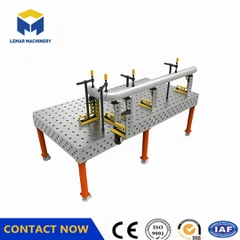
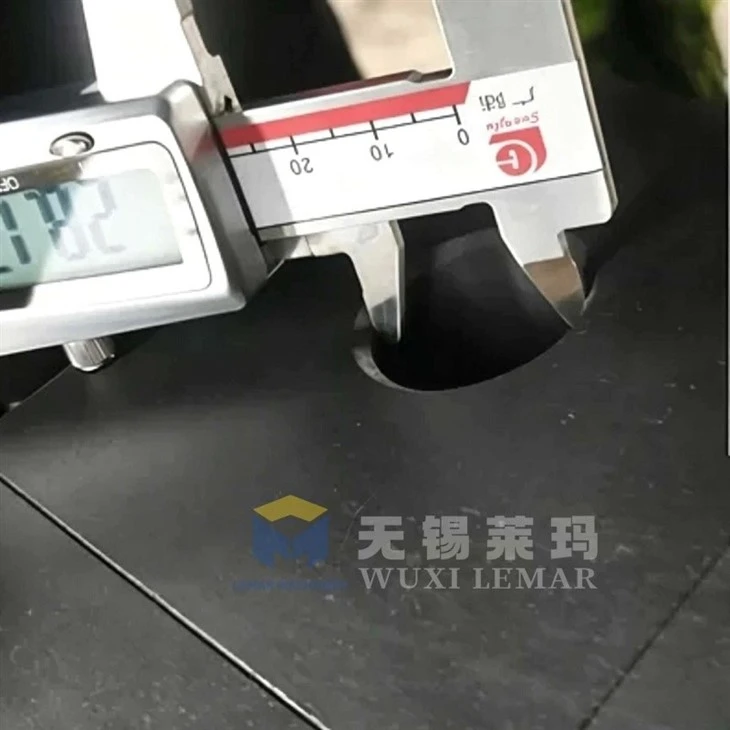
First, let's clear up what a 3D precision welding table actually is, because the name can be a little misleading if you're new to the space. Unlike a standard welding table, which is a single flat surface with a few generic holes, a 3D precision table has a grid of precisely machined, precision-drilled holes across its entire surface-most commonly the D28 or D16 hole pattern, which refers to the diameter and spacing of the holes (28mm and 16mm, spaced 100mm apart on center for modularity). These tables are designed to work with a wide range of accessories: clamps, bolts, fixtures, support arms, and more, all built to slide into the holes at any point, allowing you to adjust angles, heights, and positions in seconds.
A lot of manual welders I talk to start with the same instinct: "This sounds like overkill for my work." If you're welding a simple repair, like fixing a broken lawnmower frame or a small bracket, a basic table works fine. But if you're tackling anything that requires repeatable alignment, complex geometries, or consistent part accuracy, the 3D table's biggest advantage-its modular adjustability-becomes a game-changer. Let's start with the core of manual welding: consistency. When you're welding manually, even small variations in part positioning can lead to warping, uneven welds, or parts that don't fit together after fabrication. For example, if you're building a custom metal frame, aligning two 10-foot steel tubes by eye on a standard table can leave a 1/8-inch gap at one end, which means you have to grind more, re-weld, or scrap the part. On a D28/D16 welding table, those tubes lock into position with precision pins or clamps, and you can adjust for any small misalignment before you even strike an arc. I've seen welders cut their setup time for a custom frame from 20 minutes to 2 minutes using these tables-and that's not just a time saver, it's a quality saver.
Warpage is another huge issue for manual welders, especially when working with thicker steel or multi-pass welds. When you heat metal, it expands, and when it cools, it contracts-if a part is held loosely, that movement can cause it to twist or bend, ruining hours of work. 3D precision tables let you clamp parts at multiple, strategic points, holding them rigid through every weld pass. A welder I work with who specializes in custom exhaust systems told me that since he switched to a table like our Professional 3D Welding Platform, he's cut his rework for warped exhaust parts by 70%. "I used to have to re-twist and clamp parts mid-weld all the time," he said. "Now, the table holds everything so steady, I can run my beads straight without stopping to fix movement." That's not a small win for manual welders-less rework means less time grinding, less wasted material, and more consistent work you can stand behind.
But wait-what about the size and weight of these tables? A lot of manual welders worry that a 3D table is too bulky for a small workshop, or that it's too heavy to move around. That's a fair concern, and it's why we offer options tailored to different needs. For small fabricators or hobbyists who do occasional manual welding, our smaller D16 tables (which are slightly lighter and more compact) work perfectly in a 10x10 shop space. For production welders working on larger parts, our heavy-duty options, like the Heavy Duty Welding Table, can hold thousands of pounds without flexing, which is critical for manual welders working on big projects. I also want to address the myth that these tables are only for automated or robot welding. Yes, we make Robot welding table models for automated lines, but the same modular design translates seamlessly to manual work. Many of our most popular sellers for manual welders are our standard and professional 3D tables-not the robot-specific ones. The flexibility to add or remove clamps on the fly is just as useful for a single manual welder as it is for a robot arm.
Another point that comes up a lot: the learning curve. Manual welders who've worked with standard tables for decades often think they'll struggle to adjust to a 3D table, but in my experience, that's not the case. Most welders I've trained to use these tables pick up the basic setup in less than an hour. The grid pattern and standardized accessories mean there's no guesswork about where to place clamps-you just align a part, drop a clamp into the nearest hole, and tighten. We also include a guide with every table that shows common setups for projects like boxes, frames, and brackets, so new users don't have to figure everything out from scratch. For a welder who's tired of fumbling with C-clamps that slip or shift, this learning curve is more than worth it. Once you use a 3D table for a week, you'll wonder how you worked without it.
But let's be honest-3D precision welding tables aren't for every manual welder. If you only weld once a month, and your projects are super simple (like a small repair or a tiny bracket), the cost of a table might not make sense. A standard welding table costs a fraction of a 3D table, and it'll do the job just fine for those rare, small projects. But if you're a manual welder who takes on regular custom work, or if you're growing your business and looking to improve quality, consistency, and speed, a 3D table is an investment that pays for itself quickly.
One of the biggest advantages I've seen firsthand with manual welding on a 3D table is the ability to create repeatable setups. If you're a small business owner, and you get an order for 10 identical metal brackets, a standard table means adjusting each bracket by eye, which leads to slight differences in every part. On a table like our 3D Welding Fixture Table With Jigs, you can create a fixture for that bracket once, and then replicate it 10, 20, 50 times-exactly the same every time. That consistency doesn't just make your work look better; it makes your customers happier, because their parts fit together perfectly without extra grinding or adjustment. I had a customer who runs a small fabrication shop tell me that after switching to our 3D tables, he landed a big contract with a local construction company because he could deliver identical metal frames for 100 small sheds-something he couldn't do reliably with his old standard table.
I also want to address the practical, on-the-job stuff that doesn't show up in specs. For manual welders, a table that's at the right height makes a huge difference for ergonomics. 3D tables are designed with adjustable legs in most models, so you can set the table height to match your stance, whether you're standing, sitting, or using a welding cart. That reduces fatigue during long days of manual welding, and it lowers the risk of injuries like back strain or wrist pain-something I hear about all the time from welders who've been using the same old fixed-height table for years.
Of course, no tool is perfect, and 3D precision tables have their limits. They require a small amount of regular maintenance-cleaning the holes so clamps slide easily, and tightening bolts when needed. But that maintenance is minimal compared to the time you'll save on setup and rework. And for manual welders who work in dusty or dirty environments, it's easy to keep the table clean with a wire brush or compressed air.
Over the last 10 years in this business, I've talked to hundreds of manual welders who went into this question skeptical, and almost all of them ended up becoming regular customers. One welder, a man named Joe who runs a small custom welding shop in Ohio, told me after his first month with a D28 table: "I used to complain that I spent half my day adjusting clamps. Now I spend half my day welding. That's changed everything for my business." That's the real answer to whether a 3D precision welding table is suitable for manual welding-it's not a one-size-fits-all, but for most manual welders who want to improve their work, grow their business, or just make their days easier, it's not just suitable-it's a game-changer.
If you're a manual welder still on the fence, here's the question to ask yourself: Am I happy with my current setup? Do I struggle with alignment, warpage, or wasted time adjusting parts? If the answer is yes, a 3D precision table is worth exploring. Whether you're a hobbyist looking to upgrade your garage setup, or a small business owner looking to improve quality and speed, our range of tables has options for every space and every budget. We've got compact D16 tables for small workshops, heavy-duty tables for large production runs, and fixture tables with jigs for repeat projects-all designed with manual welders in mind, not just robot operators or production lines.
If you're ready to stop fighting with your workbench and start focusing on the welding that matters, reach out to our team to learn more about which table is right for you. We can walk you through setups, show you examples of projects other manual welders have completed, and answer any questions you have.

Send Inquiry