

What factors should be considered when selecting a flange nut?
Jun 04, 2025
Leave a message
Hey there! As a flange nut supplier, I've had my fair share of customers scratching their heads over which flange nut to pick. It's not as simple as it might seem at first glance. There are a bunch of factors you gotta consider to make sure you're getting the right one for your project. So, let's dive into what those factors are.
1. Size and Thread Pitch
First off, size matters big time. You need to match the flange nut's size to the bolt it's gonna be paired with. The diameter of the nut has to fit snugly on the bolt. If it's too big, it won't hold properly, and if it's too small, well, it just won't go on at all.
Thread pitch is another crucial aspect. It refers to the distance between the threads on the bolt and nut. A mismatch in thread pitch can lead to a really bad fit. You might end up with a nut that's loose or one that's so tight it's a pain to install or remove. For example, if you're working on a machine that requires a fine - pitched thread, using a coarse - pitched flange nut is a no - go. You can find a wide range of sizes and thread pitches in our Flange Lock Nut collection, which is designed to meet various industrial needs.
2. Material
The material of the flange nut can make or break its performance. Different materials have different properties, and you need to choose one that suits your application.
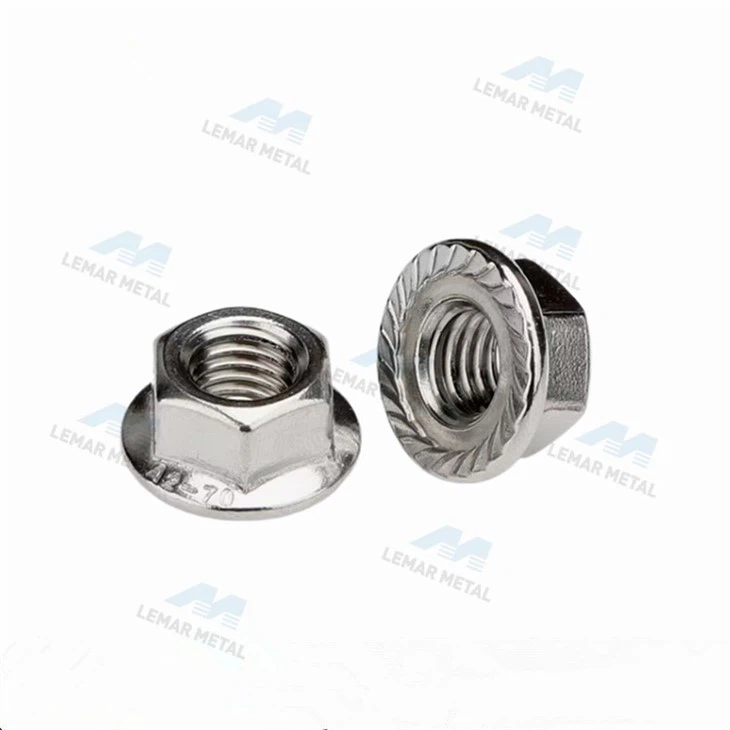
- Steel: Steel flange nuts are super common. They're strong, durable, and can handle a lot of stress. They're a great choice for heavy - duty applications like construction and automotive manufacturing. Our Steel Serrated Hex Flange Nut is made from high - quality steel, which provides excellent strength and resistance to wear and tear.
- Stainless Steel: If you're working in an environment where corrosion is a concern, stainless steel is the way to go. It resists rust and oxidation, making it ideal for outdoor or marine applications. Stainless steel flange nuts can withstand exposure to water, chemicals, and harsh weather conditions without losing their integrity.
- Brass: Brass flange nuts are known for their good electrical conductivity and anti - galling properties. They're often used in electrical applications or in situations where you need to prevent metal - to - metal seizure.
3. Design and Shape
Flange nuts come in different designs and shapes, each with its own advantages.
- Serrated Flange: Serrated flange nuts have teeth on the flange. These teeth dig into the surface they're tightened against, providing extra resistance to loosening. They're great for applications where vibration is an issue, like in machinery or automotive engines. Our Steel Serrated Hex Flange Nut features a serrated design that ensures a secure hold.
- Flat Flange: Flat flange nuts have a smooth, flat flange. They're often used when a more even distribution of load is required. They can be a good choice for applications where you don't want the serrations to damage the mating surface.
- DIN6923 Flange Nut: The DIN6923 Flange Nut is a standardized design. It has specific dimensions and characteristics that make it suitable for a wide range of European and international applications. It's a popular choice in industries that follow DIN standards.
4. Load Capacity
You need to know how much load the flange nut can handle. Load capacity depends on factors like the material, size, and design of the nut. If you're using the nut in a high - stress application, like a bridge or a large - scale industrial machine, you'll need a nut with a high load capacity.
Before making a purchase, it's a good idea to calculate the expected load on the nut. You can refer to engineering manuals or consult with our experts to determine the right flange nut for your load requirements. Using a nut with a load capacity that's too low can lead to nut failure, which can be dangerous and costly.
5. Environmental Conditions
The environment in which the flange nut will be used plays a significant role in the selection process.

- Temperature: Extreme temperatures can affect the performance of the nut. For example, in high - temperature applications, some materials may lose their strength or become brittle. In low - temperature environments, materials may become more prone to cracking. Make sure to choose a flange nut that can withstand the temperature range of your application.
- Chemicals and Moisture: If the nut will be exposed to chemicals or moisture, you need to select a material that's resistant to them. As mentioned earlier, stainless steel is a good choice for environments with high humidity or chemical exposure.
6. Cost
Let's face it, cost is always a factor. You want to get the best value for your money. While it might be tempting to go for the cheapest option, it's important to balance cost with quality. A low - cost nut that fails quickly can end up costing you more in the long run due to replacement and downtime.
At our company, we offer a range of flange nuts at competitive prices. We believe in providing high - quality products that meet your needs without breaking the bank. You can explore our different product lines, like the Flange Lock Nut and DIN6923 Flange Nut, to find the right balance between cost and quality.
7. Compatibility with Other Components
The flange nut needs to be compatible with other components in your system. For example, it should fit well with the washers, bolts, and the mating surface. If the nut doesn't fit properly with other parts, it can cause problems like uneven loading, loosening, or damage to the components.
Before making a purchase, double - check the specifications of all the components in your system to ensure they're compatible. Our team of experts can also help you with compatibility issues and provide advice on the best flange nut for your specific setup.
Conclusion
Selecting the right flange nut is a crucial decision that can impact the performance and safety of your project. By considering factors like size, material, design, load capacity, environmental conditions, cost, and compatibility, you can make an informed choice.
If you're in the market for high - quality flange nuts, we're here to help. Our extensive range of products, including Flange Lock Nut, DIN6923 Flange Nut, and Steel Serrated Hex Flange Nut, is designed to meet the diverse needs of our customers. Contact us today to discuss your requirements and start a procurement discussion. We're looking forward to working with you!
References
- Machinery's Handbook: A comprehensive reference for mechanical engineering and manufacturing, which provides detailed information on fasteners and their applications.
- ASTM International Standards: Standards related to materials, dimensions, and testing of fasteners, including flange nuts.
Send Inquiry