


What is the load - bearing capacity of a high precision welding table surface?
Nov 25, 2026
Leave a message
If you've ever spent time in a precision welding shop, you know that the welding table isn't just a flat surface to hold parts- it's the backbone of every stable, accurate weld. Whether you're tacking thin aerospace panels or assembling heavy-duty structural components, one question always comes up: What's the load-bearing capacity of a high precision welding table surface?
As a supplier who's worked with shops ranging from small job shops to large automotive manufacturing facilities for over a decade, I can tell you this isn't a one-size-fits-all answer. It depends on how the table is built, what it's made of, and how you use it. Too often, buyers focus only on size or price without digging into load capacity, only to find their table warps under heavy fixtures or loses precision after a few months of use. That's why I'm breaking down everything you need to know about a high precision welding table's load-bearing capacity, straight from the perspective of someone who's helped hundreds of companies make the right choice.
First, let's clarify what "load-bearing capacity" actually means for a precision welding table. This isn't just how much total weight the surface can hold before it collapses. For high precision work, it's about two more critical metrics: static load capacity (the steady, fixed weight of your parts, fixtures, and tooling) and dynamic load capacity (weight that shifts, vibrates, or moves during welding, like when you reposition a large component or run a high-amperage weld that causes heat expansion). Most manufacturers only list total static load, but dynamic load is where precision tables really perform. For example, a table with a 10,000 lb static load might only handle 6,000 lb of dynamic load before the surface deflects- and even 0.002 inches of deflection is enough to throw off weld alignment for parts that need sub-millimeter accuracy.
The biggest factor affecting load-bearing capacity is the table's construction, and the core material is where it all starts. High precision welding tables aren't made from cheap, low-grade steel- they use high-carbon, stress-relieved cast iron or precision-machined steel plate, both of which go through rigorous processes to eliminate internal stress. When a table is cast iron, it's heated to over 1,500 degrees Fahrenheit, then cooled slowly over weeks to prevent warping. Steel plate tables, by contrast, are cut from thick, double-milled plates that are machined on both sides to ensure perfect flatness. Without this stress relief, even a table marketed as "precision" will shift slightly under load, leading to inconsistent welds and lost rework time.
But construction goes beyond the surface material. The table's frame and support structure are just as important, especially for larger tables. A 4x8 foot table with a thin, unsupported surface will sag in the middle even with a small load, while the same size table with a reinforced frame and cross-supports can hold far more weight without deflection. Another often-overlooked detail is the table's mounting holes and precision. High precision welding tables use standardized hole patterns- most commonly 28mm (D28) or 16mm (D16) holes on 100mm or 50mm grids, respectively. These holes aren't just for clamps; they're precision-machined to within 0.001 inches of tolerance, so when you add fixtures or parts, the load is distributed evenly across the surface, not concentrated in a few spots. If the holes are out of tolerance, you'll have hot spots that cause deflection even with lighter loads.
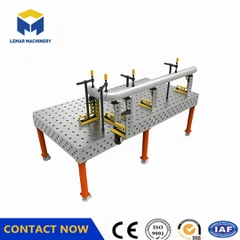
Now, let's talk about real-world load capacities, because numbers don't mean much without context. For small to medium precision welding jobs- think custom medical device frames, aerospace components, or automotive body parts- a 2x4 foot table usually has a static load capacity of 2,000 to 5,000 lb and a dynamic load of 1,200 to 3,000 lb. These tables are perfect for light to medium clamping, small part assemblies, and precise tacking. For larger jobs, like heavy agricultural equipment parts, industrial frames, or multi-part assemblies, 4x8 foot tables are more common, with static loads ranging from 8,000 to 15,000 lb and dynamic loads from 5,000 to 9,000 lb. The heavy-duty Robust 3D Welding Table, for example, we supply is designed for these higher loads, with reinforced cross-supports and a thicker surface that can handle consistent, heavy use without deflection.
It's important to note that these numbers apply to well-made tables, like the 3D Precision Welding Tables we produce. Cheap knockoff tables often cut corners on material thickness and stress relief, so their actual load capacity is 20-30% lower than advertised. I've seen shops buy a $1,500 "precision table" only to have it warp after a single month of use with 4,000 lb of fixtures, which cost them thousands in rework and wasted labor. That's why investing in a table with proven load capacity isn't just a purchase- it's an investment in consistent quality.
Another key factor that affects load capacity is how you set up your fixtures and use the table. Even the strongest table will deflect if you concentrate all the load in one spot. That's where a Modular 3D Welding Workbench and a 3D Welding Fixture System come in. These systems let you distribute load evenly across the table's surface by using adjustable clamps, supports, and fixtures that spread weight across multiple points, rather than resting a heavy part on a single clamp or edge. For example, when welding a large, irregularly shaped part, using a modular fixture system lets you place supports under the part's heaviest sections, keeping load within the table's design limits and preventing deflection.
Heat is another hidden enemy of load-bearing capacity. Welding generates extreme heat- sometimes up to 10,000 degrees Fahrenheit- and when that heat is concentrated on a small area of the table, it causes thermal expansion. If the table isn't properly designed to handle heat, that expansion creates uneven pressure, leading to localized deflection and even warping over time. High precision welding tables we design include features like heat-dissipating surfaces and spaced mounting holes that let heat escape, so thermal expansion is minimized. That's critical for jobs that involve long welds or high-amperage processes, where heat could throw off both load capacity and weld alignment.
Let's use a real example to put this in perspective. A custom fabrication shop we work with was welding aluminum truck frames, which weigh around 6,000 lb when fully assembled. They were using a cheap, 4x8 table that advertised a 10,000 lb static load, but when they added fixtures to hold the frame in place, the table deflected 0.006 inches- enough to make their welds misalign by 0.008 inches, which was outside their quality standards. They switched to a 4x8 3D Precision Welding Table, which has a rated static load of 12,000 lb and a dynamic load of 7,200 lb, and paired it with a modular fixture system to distribute the frame's weight across the table. After the switch, their deflection dropped to 0.001 inches, and they cut their rework rate by 40%. That's the difference between understanding load capacity and buying a table based on price alone.
Now, how do you calculate the right load capacity for your needs? Start by adding up the total weight of all the parts you'll be welding at once, plus the weight of your fixtures, clamps, and any tooling you'll leave on the table. For dynamic loads, add 20-30% to that total to account for shifting parts, vibration, and heat-related expansion. If you're working with large, irregular parts, you may need to add even more to account for uneven weight distribution. Always choose a table with a load capacity that's at least 20% higher than your total calculated needs- that buffer gives you flexibility for future projects and prevents premature wear.
It's also worth considering long-term use. A table that's used daily for heavy loads will degrade over time, even if it's built correctly. Regular maintenance, like cleaning the surface, lubricating mounting holes, and checking for warping or deflection, will help preserve load capacity. Every few months, use a precision straightedge or dial indicator to check the table's flatness- if it's off by more than 0.002 inches over 4 feet, it's time for repairs or replacement. For our D28 Welding Table, we offer annual calibration checks and maintenance services to make sure our tables stay within their load capacity and precision standards for years.
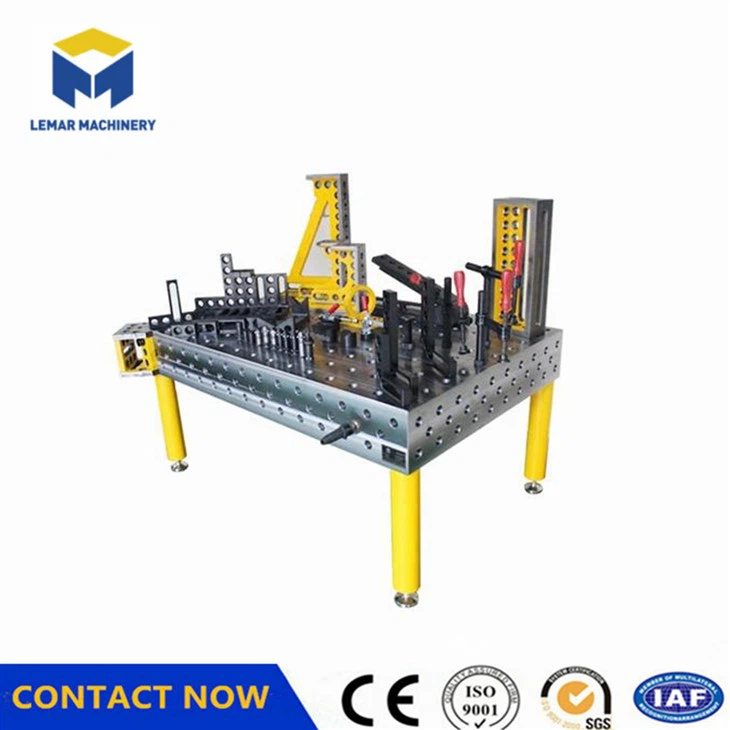

One common myth we hear is that all 3D welding tables have the same load capacity. That's simply not true. The difference comes down to material, construction, and design. Robust 3D Welding Tables, for example, are built with a 20mm thick steel surface and reinforced frame, making them ideal for heavy industrial use, while smaller tables for light precision work may use a 15mm surface, with lower load capacity but more maneuverability. It's important to match the table's load capacity to your specific welding applications, not the other way around.
If you're in the market for a new high precision welding table, don't just look at the advertised load number. Ask for third-party test data or customer testimonials from shops that use the table for similar applications. Look for tables that are stress-relieved, have a proven flatness tolerance, and come with a warranty that covers load-related defects. A good table should last 10-15 years with proper care, so investing in quality pays off in the long run.
At the end of the day, the load-bearing capacity of a high precision welding table surface isn't just a technical specification- it's the foundation of consistent, high-quality welds. Too many shops overlook this detail, leading to wasted time, rework, and costly mistakes. Whether you're a small job shop or a large manufacturing facility, taking the time to understand load capacity, choose a table that meets your needs, and use it correctly will save you thousands of dollars and help you deliver better products to your customers.
If you're ready to find the right high precision welding table for your projects, our team can help you evaluate your load requirements, fixture needs, and application to recommend the perfect solution. We offer a range of tables, including Modular 3D Welding Workbenches, 3D Welding Fixture Systems, 3D Precision Welding Tables, Robust 3D Welding Tables, and D28 Welding Tables, all designed to deliver reliable load capacity and long-term precision. Reach out to our team to discuss your specific needs today.
Send Inquiry