

Are there any Tig welding table tops with built - in gas ports?
Nov 25, 2026
Leave a message
If you've ever spent a Tig welding session fighting with gas hoses, shoving them under clamps, or tangling them around your workpieces while you're trying to get a clean, precise bead, you know how frustrating that can be. The short answer to "Are there any Tig welding tabletops with built-in gas ports?" is yes-they exist, and they're one of the biggest upgrades we've rolled out in the last 5 years for serious hobbyists and pro welders alike. But let's break this down, because not all built-in gas ports are made the same, and there are some key things you need to know before you drop cash on one.
First, let's start with why gas ports matter for Tig welding specifically. Tig welding runs on argon gas, right? That gas shields your molten weld pool from atmospheric contamination-if it gets messed up by drafts, dust, or even just the backflow of your filler metal, you'll get porous, brittle welds that fail way faster than they should. A lot of cheap weld tables skip gas ports, forcing you to rig up separate hoses, clips, or even tape to hold lines out of the way. Those hacks always go wrong: one wrong move, and your hose shifts, creating a draft, or a clamp crushes the line mid-weld, leaving you with a bad bead and a do-over. Built-in ports eliminate that whole headache, but only if they're designed for Tig, not just generic MIG or stick welding.
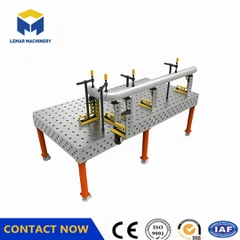
Here's the thing: not all "welding tables with gas ports" are optimized for Tig. Some companies drill random holes in the tabletop and call it a day, but those holes might be too small for standard argon hoses, or they might not have proper connectors to prevent leaks. Our Tig welding table tops, for example, have precision-machined 1/4-inch NPT ports spaced 12 inches apart along the table's edge and even under the surface if you get the extended model-size perfect for standard Tig gas lines, no weird adapters needed. We test every port for leaks before it leaves the warehouse, so you don't show up to a job site and find your gas is seeping out before it even reaches your torch.


Wait, let's talk about how these ports work in practice, because that's the part no one explains well. When you're setting up a Tig weld, you run your main gas line from your regulator to one of the table's built-in ports, then use short, flexible leads to connect your torch cable to that port. The ports are also designed to hold small fittings for cooling lines if you're doing long welds on thick material, but the real win for Tig is the way they route the gas neatly. No more hoses draping over your workpiece, no more tripping over lines when you're reaching for your filler rod. That small convenience actually adds up: a Tig welder's rhythm is everything, and even a 10-second delay from fumbling with a hose can throw off your bead speed and consistency.
Now, if you're looking beyond just the gas ports themselves, our line of welding accessories ties right into that functionality. A lot of welders who upgrade to built-in gas ports also grab modular jigs to hold their workpieces steady, right? If you're interested in mixing the port design with flexible, customizable setup tools, check out our 3D Welding Fixture Table With Jigs. Those jigs fit perfectly with our Tig tabletops, and you can clamp parts tight without worrying about them covering a gas port. We've also got the Three Dimensional Flexible Welding Platform, which lets you adjust your work angle on the fly-great for Tig welders who work on irregularly shaped parts like bike frames or small metal fabrications, and the ports are placed so even when you tilt the table, gas flow stays consistent.
I should also mention material here, because a tabletop's construction affects how long those gas ports last. Cast iron is a popular pick for heavy-duty welding, and our Cast Iron Welding Fixture Table has some of the best port machining I've seen. The ports are recessed slightly to protect the connectors from being hit by tools or workpieces, and the cast iron's dense surface doesn't warp over time, so your ports stay aligned and leak-free even after years of heavy use. If you're on a budget or need something more portable, we also have a steel Tig tabletop with built-in ports-just make sure it's powder-coated, because steel can rust, and rust will clog your ports over time. That's a mistake a lot of new welders make; they skip the coated option, and six months later their gas ports are full of rust flakes, so they have to drill new ones or replace the whole table.
Wait, let's address a common myth: some welders think built-in gas ports reduce the table's surface area for clamps or work holding. That's true if you get a cheap table with random, poorly placed ports. But our Tig welding table tops have ports spaced at 12 inches, which is exactly the standard distance for most welding clamps, so a port only blocks one clamp spot, not a whole section. And if you need even more flexibility, our Customizable welding tables let you choose port locations and spacing-perfect if you have a specific setup for your workshop, like if you mostly weld small parts that use clamps every 6 inches, or large panels that need less frequent clamping. We can even add extra ports under the table surface, which are hidden but still accessible if you need to run lines for multiple torches at once.
I've seen so many welders waste money on tables that look good but don't solve their actual problems. Last year, a hobbyist welder came to me saying he hated his Tig table because he kept getting bad welds from gas drafts, and he was always tripping over hoses. He'd bought a cheap table with "gas ports" from a big box store, but they were just holes drilled into the side that kept leaking, and he had to run his hose all the way across the table every time. We set him up with one of our Tig welding table tops, and three months later he emailed me saying his bead quality went up 30% just from not fumbling with hoses. That's the thing about these ports-they don't just make your workshop neater, they directly improve your welds.
Another thing to look for: does the table come with the necessary fittings? A lot of companies sell the table without the hose adapters, so you have to buy them separately, which adds $50-$100 to your cost. We include all the standard brass fittings for free with every Tig tabletop we sell, because we know how much of a hassle it is to track down a 1/4-inch NPT to 9/16-inch flare adapter. Those fittings are also brass, which is corrosion-resistant, so you don't have to replace them every year like you would with cheap plastic adapters.
If you're someone who does Tig welding as a side hustle, not just a hobby, the built-in gas ports will pay for themselves fast. Fewer bad welds mean less rework, less wasted filler metal, and faster setup times. I've had pro welders tell me they can start a project 15 minutes earlier now because they don't have to rig up gas lines before each weld. For someone who charges by the hour, that's a huge difference in productivity.
Now, I want to be honest here-there are some cases where built-in gas ports might not be for you. If you're a mobile welder who takes your table to job sites all the time, the ports can make the table slightly heavier, and you might have to cap them when you're moving it to keep debris out. But even then, it's a trade-off most mobile welders are happy to make, because the convenience of not hauling separate gas lines is worth the extra 20 pounds. And for most people working in a fixed workshop, the downsides are nonexistent.
If you're still on the fence, a lot of welders I know will rent a table with built-in gas ports for a weekend before they buy. But when you're ready to upgrade, our team can help you pick the right size and configuration-whether you need a 2x4 table for small hobby projects or a 4x8 heavy-duty table for large fabrication jobs. We've also got options with built-in drainage if you're doing outdoor welding, which is a nice bonus for shops that set up outside on nice days.
At the end of the day, the question isn't just "are there Tig welding tabletops with built-in gas ports?"-it's "are the ones on the market actually worth the investment?" For us, that's why we design our ports specifically for Tig, not as an afterthought. We've tested them with every standard Tig torch, every gas regulator, and every common welding setup, so you don't have to. If you're tired of fighting gas hoses, wasting material on bad welds, and wasting time on setup, it's worth checking out what we have to offer.
We've helped hundreds of welders-from hobbyists just starting out to industrial fabricators-upgrade their workshops with tables that solve real, everyday problems. If you're ready to learn more about how a Tig welding table top with built-in gas ports can improve your workflow, or if you want to ask about custom sizes, jigs, or other accessories, reach out to our team to chat through your specific needs. We're here to help you find the right setup for your projects, no pressure.
Send Inquiry