

First-line mechanical engineers talk about the practical knowledge of locating pins and pin holes
May 05, 2024
Leave a message
Friends in the mechanical industry should have used locating pins, and friends who do design often design locating pin holes. This article shares some knowledge about pins and pin holes, which may be helpful to friends.
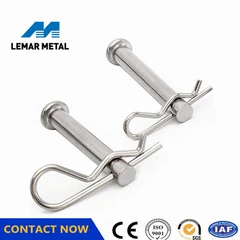
What is the function of locating pins? As the name suggests, locating pins are used for positioning, or they can be said to be parts used to limit the freedom of an object. Locating pin holes are holes for installing locating pins. If locating pins are used, it is generally necessary to process locating pin holes.
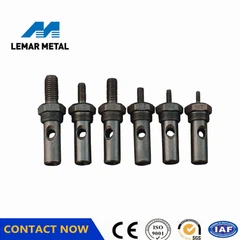
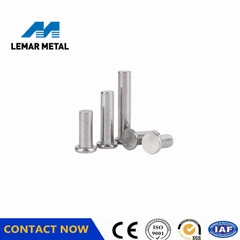
The locating pins we commonly use are cylindrical pins and conical pins. What is the difference between the two? Cylindrical pins are suitable for occasions that do not require frequent disassembly and assembly, while conical pins are suitable for occasions that often require disassembly and assembly; cylindrical pins can pre-process pin holes, and conical pins usually need to be matched; cylindrical pins can play a certain role in shear resistance, while conical pins are usually only used for positioning.
The common processing method for cylindrical pin holes is to drill holes first and then ream holes, so that the size can be controlled more precisely. In addition, the roughness of the hole wall surface is also relatively high, usually reaching a roughness of 0.8. The processing of the conical pin hole is also to make a bottom hole first, and then use the national standard 1:50 cone reamer to ream the hole.
How to give the tolerance of the cylindrical pin hole and the cylindrical pin? Our cylindrical pin holes are generally designed according to the tolerance of H6 or H7. For example, the tolerance of the pin hole of φ10 is: φ10H7 (+0.015 0). How to choose the pin? In fact, there are many tolerances for pins. You can choose the matching situation according to your needs, such as pins with several tolerances such as h7, m6, and g6. Our company generally chooses pins with m6 tolerance, for example, the tolerance of the pin of φ10 is: φ10m6 (+0.015 +0.006). Such a match is actually a transition match.
One thing needs to be explained, that is, many friends do not pay much attention to the tolerance of the pins when buying pins, so the pins bought in this way may be loose or tight. If the positioning requirements are not high, the on-site treatment method is: if the pin hole fits a little loose, you can add some anti-loosening glue to prevent the pin from falling off. If you want a better fit, you can selectively purchase the pin tolerance, which mainly depends on whether you pay attention to these details.
Send Inquiry