

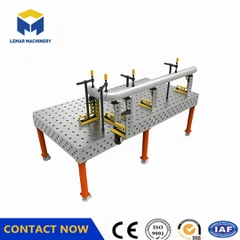




How to judge the quality of a 3D welding table?
Nov 07, 2025
Leave a message
1. Materials and Casting Process
Material Selection: High-quality welding tables typically use HT250 or HT300 gray cast iron, with tensile strengths of no less than 250MPa and 300MPa respectively. For heavy-duty or high-frequency vibration applications, QT600 ductile iron can be used, with a tensile strength of ≥600MPa and superior damping performance.
Casting Quality: Resin sand casting process should be used to avoid defects such as pores and sand inclusions. Castings must undergo aging treatment (natural aging ≥6 months or artificial aging at 550℃ for 4 hours) to eliminate internal stress and prevent deformation.
2. Structural Design and Strength
Rib Plate Layout: A "cross rib plate + box-type main body" design is used, with rib plate thickness of 12-15mm and spacing of 200-250mm, which can increase torsional rigidity by more than 40%. For example, a 2000×3000mm base should have a deflection of ≤0.02mm when bearing 50kN.
Load Capacity: The rated load capacity of the base should be ≥1.2 times the weight of the testing machine + the weight of the tested part + the dynamic load force, ensuring no plastic deformation.
3. Machining Accuracy and Inspection
Datum Surface Accuracy: The working surface needs to be processed through rough grinding → fine grinding → ultra-fine grinding, with a flatness error ≤0.05mm/m (grade 0 accuracy), and a surface roughness Ra of 1.6-3.2μm. Inspection should be carried out according to GB/T 22095-2008 standard, using a level, optical flat, or laser interferometer.
Vibration Resistance: A high-quality base should be able to absorb 5-2000Hz vibration, with a damping ratio ≥0.03 and a vibration transmission rate ≤15%.
4. Functionality and Adaptability
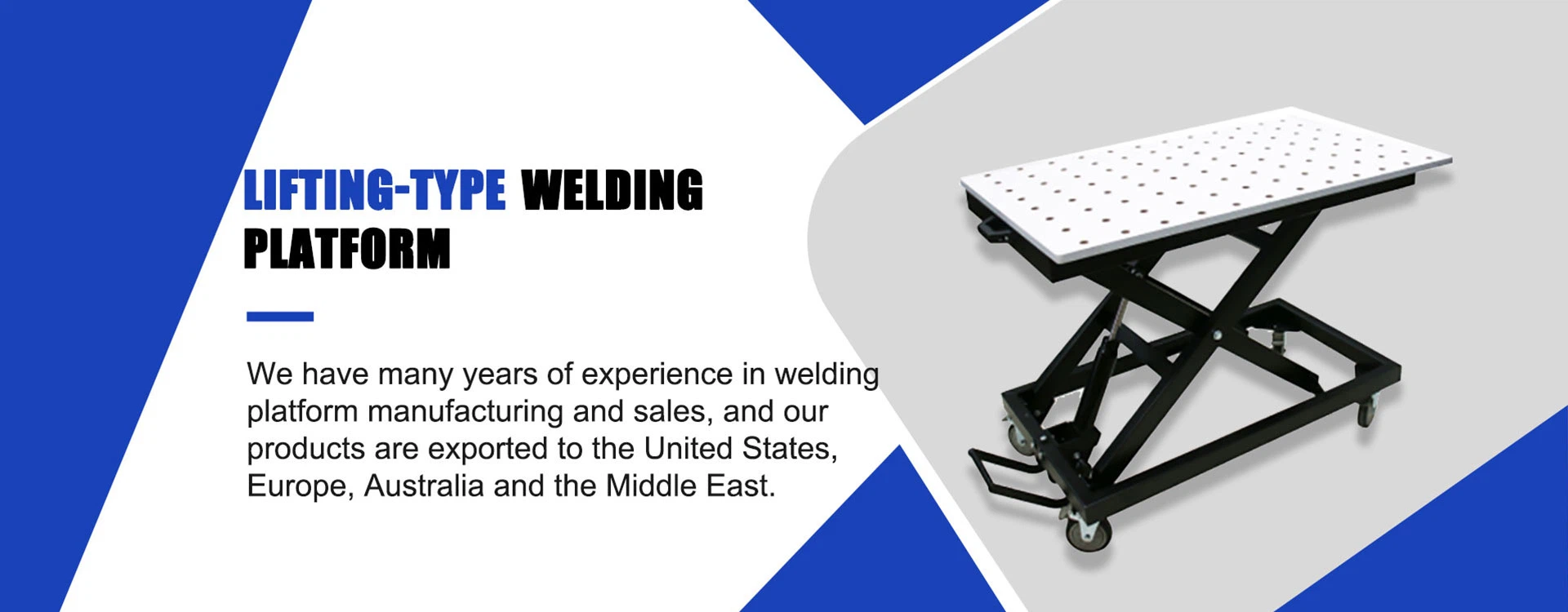
Functional Design: Choose whether to include T-slots, U-slots, or bolt holes according to requirements. For T-slots, the slot width (e.g., 14mm, 18mm), spacing, and quantity should be specified. Environmental adaptability: The impact of temperature changes (temperature difference ≤ 2℃/h) and humidity (40%-60%) on accuracy must be considered, to avoid thermal deformation or corrosion.

Send Inquiry