


Types Of Nuts
Jun 09, 2024
Leave a message
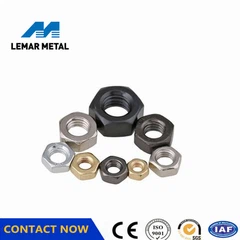
Nuts are parts that tightly connect mechanical equipment. Through the inner thread, nuts and bolts of the same specifications can be connected together. For example, M4-P0.7 nuts can only be connected with M4-P0.7 series bolts (in nuts, M4 means that the inner diameter of the nut is about 4mm, and 0.7 means that the distance between two thread teeth is 0.7mm); the same is true for American products, for example, 1/4-20 nuts can only be matched with 1/4-20 screws (1/4 means that the inner diameter of the nut is about 0.25 inches, and 20 means that there are 20 teeth in every inch).
Stainless steel
Self-locking nuts, anti-loosening nuts, locking nuts, four-claw nuts, screw-in nut insurance nuts, thin rod screw connection nuts, self-locking hexagonal cap nuts, special nuts for anchor screws, hexagonal crown thin nuts, and eye nuts.
Fine-pitch all-metal hexagonal flange locking nuts, all-metal hexagonal flange locking nuts, fine-pitch non-metallic insert hexagonal flange locking nuts, fine-pitch hexagonal flange nuts
Welded square nuts, welded hexagonal nuts, snap nuts, embedded round nuts
Round nuts with grooves, round nuts with holes on the sides, round nuts with holes on the ends, small round nuts
Round nuts, ring nuts, butterfly nuts
Copper materials
Copper nuts, inlaid copper nuts, knurled copper nuts, embedded copper nuts, injection molded copper nuts, etc.
Alloys
Zinc-copper alloy nuts, etc.
Send Inquiry